



In the Loop – March 13, 2026
“In The Loop” is designed to give you a short update reflecting major developments, earnings, and investment trends across some core Equity Income and Growth holdings. All clients should be aware that individual buy/sell recommendations will be conveyed directly to you on an individual basis. Have a great weekend.
Tensions surrounding the Strait of Hormuz intensified after Iranian state media reported that the country’s new supreme leader, Mojtaba Khamenei, pledged to continue blocking the critical waterway. The narrow passage—just 21 miles wide at its tightest point—serves as one of the world’s most important oil transit routes, and disruptions there are already reverberating through global energy markets. The International Energy Agency warned that the situation could represent the largest oil supply disruption in modern history as attacks on tankers and energy infrastructure threaten shipments from the Persian Gulf. With oil terminals in Iraq and Oman temporarily closed and the U.S. hesitant to send naval escorts into the confined waters due to the risk of missile and drone strikes from nearby Iranian positions, the Strait has become the central pressure point in an escalating regional conflict.
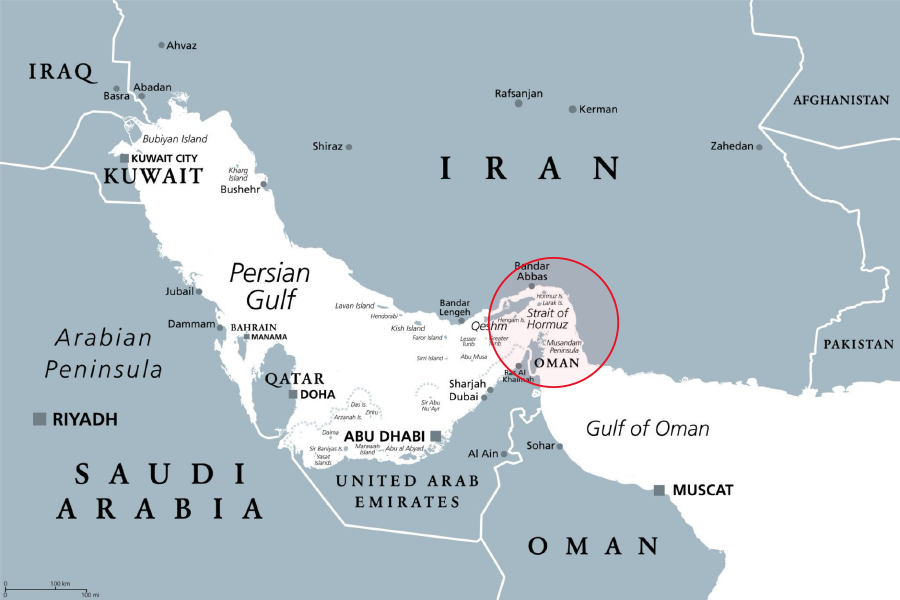
Rising geopolitical tensions in the Middle East highlight a lesser-known but important economic risk: the potential disruption of global petrochemical supply. A large portion of the world’s plastics and chemical feedstocks—used to make everything from packaging and medical equipment to automotive components and construction materials—moves through the Strait of Hormuz. If shipments from the region are slowed or interrupted, global supplies of key plastics such as polyethylene and polypropylene could tighten quickly. Because manufacturers typically hold limited inventories, even a short disruption could push input costs higher across many industries. This creates the possibility of a “silent” inflationary pressure—one that may not make headlines immediately but could gradually raise production costs for businesses and, ultimately, prices for consumers throughout the economy.
If chemicals such as ethylene, propylene, polyethylene, and polypropylene (which are necessary in modern manufacturing) become popular names on CNBC next week, I think that is a clue that global supply chains will be affected. When investors anticipate higher energy prices or supply-chain disruptions, they also expect higher transportation, manufacturing, and consumer costs. That creates a risk that inflation could re-accelerate rather than continue declining.
At the start of the year, financial markets were expecting the Federal Reserve to deliver as many as three interest-rate cuts in 2026 as inflation appeared to be trending lower. Since the outbreak of conflict in the Middle East, however, those expectations have shifted significantly, with markets now anticipating only one potential cut. We think we could still get interest rate cuts. However, it may be for the wrong reasons.
Even though it is Friday the 13th, let’s finish on a positive note. The S&P 500 is trading at its 200 Day Moving Average (6,530–6,600 zone). This is viewed as long-term support area. Historically, good fundamental things happen in these key technical areas. This time around, de-escalation or an off-ramp would be considered favorable to the US and Global Markets. Earlier this week when a rumor that the U.S. Navy could begin escorting tankers through Hormuz, it sparked a risk on rebound, with the S&P 500 bouncing 1.4% as oil prices dropped roughly 10%. Cyclical and tech names outperformed as traders treated potential escorts as a path to supply normalization and lower tail risk on crude. When the time is right, this will be the ultimate outcome.
Have a great weekend.
Individual Company Updates
Vertiv continues to strengthen its position as a key supplier to the rapidly expanding AI data-center ecosystem. The company will be added to the S&P 500 on March 23 as part of the index’s quarterly rebalance, a milestone that typically drives additional institutional demand through automatic inflows from passive funds. The inclusion follows strong operational momentum and a stock rally of more than 200% over the past year. Vertiv also recently completed a major refinancing following upgrades to investment-grade credit ratings from Moody’s, S&P, and Fitch, issuing $2.1 billion in long-term notes and securing a new $2.5 billion revolving credit facility that strengthens liquidity and reduces refinancing risk. In addition, the company announced a strategic partnership with Generate Capital to launch a “Bring Your Own Power & Cooling” solution that allows data-center developers to deploy on-site power and cooling infrastructure before grid upgrades are available. The initiative addresses one of the key bottlenecks in the AI infrastructure boom and could expand Vertiv’s addressable market while creating new recurring service opportunities.
Broadcom reported exceptional results in fiscal Q1 2026 as demand for AI semiconductors and networking infrastructure continued to surge. Revenue rose 29% year-over-year to a record $19.3 billion while adjusted EPS climbed 28% to $2.05. AI-related semiconductor revenue more than doubled to $8.4 billion and is expected to accelerate further to $10.7 billion in the second quarter, driven by hyperscale customers deploying custom accelerators and networking chips. The company expects total revenue of roughly $22 billion in Q2 and maintains industry-leading EBITDA margins near 68%. Broadcom’s custom AI accelerator business continues to expand with major cloud customers including Alphabet, Meta Platforms, and other leading AI developers. Management believes the company has a clear path to exceed $100 billion in annual AI chip revenue by fiscal 2027, reinforcing Broadcom’s position as a major non-GPU supplier in the global AI infrastructure buildout.
Vertex Pharmaceuticals has seen a wave of analyst upgrades following strong clinical trial results for povetacicept in IgA nephropathy, a serious chronic kidney disease. The Phase 3 RAINIER study showed highly positive results at the 36-week interim analysis, raising expectations that the therapy could become a major new revenue driver for the company. Analysts estimate potential peak sales of nearly $3 billion annually if approved. Vertex plans to submit its biologics license application by the end of March and may use a priority review voucher to accelerate the regulatory timeline, which could allow the treatment to launch in the United States as early as late 2026. The development adds another promising pipeline opportunity alongside Vertex’s existing leadership in cystic fibrosis therapies.
Alphabet recently introduced Gemini Personal Intelligence (GPI), a new context-aware AI assistant currently available in beta to U.S. subscribers of Google AI Pro and AI Ultra. The platform connects a user’s Gemini account across core Google services—including Gmail, Search, YouTube, Photos, Calendar, and Drive—allowing the assistant to reason across a user’s digital activity and provide more personalized responses. Early testing suggests the tool is intuitive and highly effective, and we expect its capabilities to improve significantly as Google continues refining the product. Strategically, GPI reinforces Google’s leadership in AI infrastructure and applications while potentially increasing engagement across its ecosystem. Over time, greater platform usage and stronger user-intent signals could translate into meaningful incremental subscription and advertising revenue for Google as AI becomes more deeply integrated into everyday digital workflows. Evercore ISI raised price target to $400.
ExxonMobil was in focus during the week as geopolitical tensions and shifting global oil trade flows supported energy markets. Escalating conflict involving Iran disrupted shipping through the Strait of Hormuz, tightening global supply and pushing crude prices higher, which helped lift shares of major producers including ExxonMobil. At the same time, changing trade routes are creating new export opportunities for U.S. refiners. ExxonMobil is preparing to ship gasoline from the U.S. Gulf Coast to Australia for the first time in more than two years, reportedly chartering vessels capable of transporting up to 600,000 barrels of fuel later this month. The move highlights how supply disruptions and regional imbalances are reshaping global fuel flows while reinforcing the strategic role of U.S. refining capacity in international energy markets.
Formidable Asset Management (“Massey Romans Capital”) is an investment adviser registered under the Investment Advisers Act of 1940. The information presented in the material is general in nature and is not designed to address your investment objectives, financial situation or particular needs. Prior to making any investment decision, you should assess, or seek advice from a professional regarding whether any particular transaction is relevant or appropriate to your individual circumstances. Although taken from reliable sources, the Firm cannot guarantee the accuracy of the information received from third parties.
The opinions expressed herein are those of the Firm and may not actually come to pass.
Author
Paul MasseyRelated posts
In the Loop – April 18, 2025
Markets are facing growing uncertainty as trade tensions, tariff concerns, and c
In the Loop – February 13, 2026
Joe Kernen asked Co-Founder of Sun Microsystems, Scott McNealy on CNBC…Can the
In the Loop – March 27, 2026
Oil tops $100, gas climbs past $4, and rate hike talk replaces cut expectations